Independent game · Beta in development
Kin Dynasty (Life Simulation Game)
Live a life. Build a dynasty.
A medieval life simulation where each year shapes your relationships, position and legacy. Build a household, navigate the realm and continue the story through your heirs.
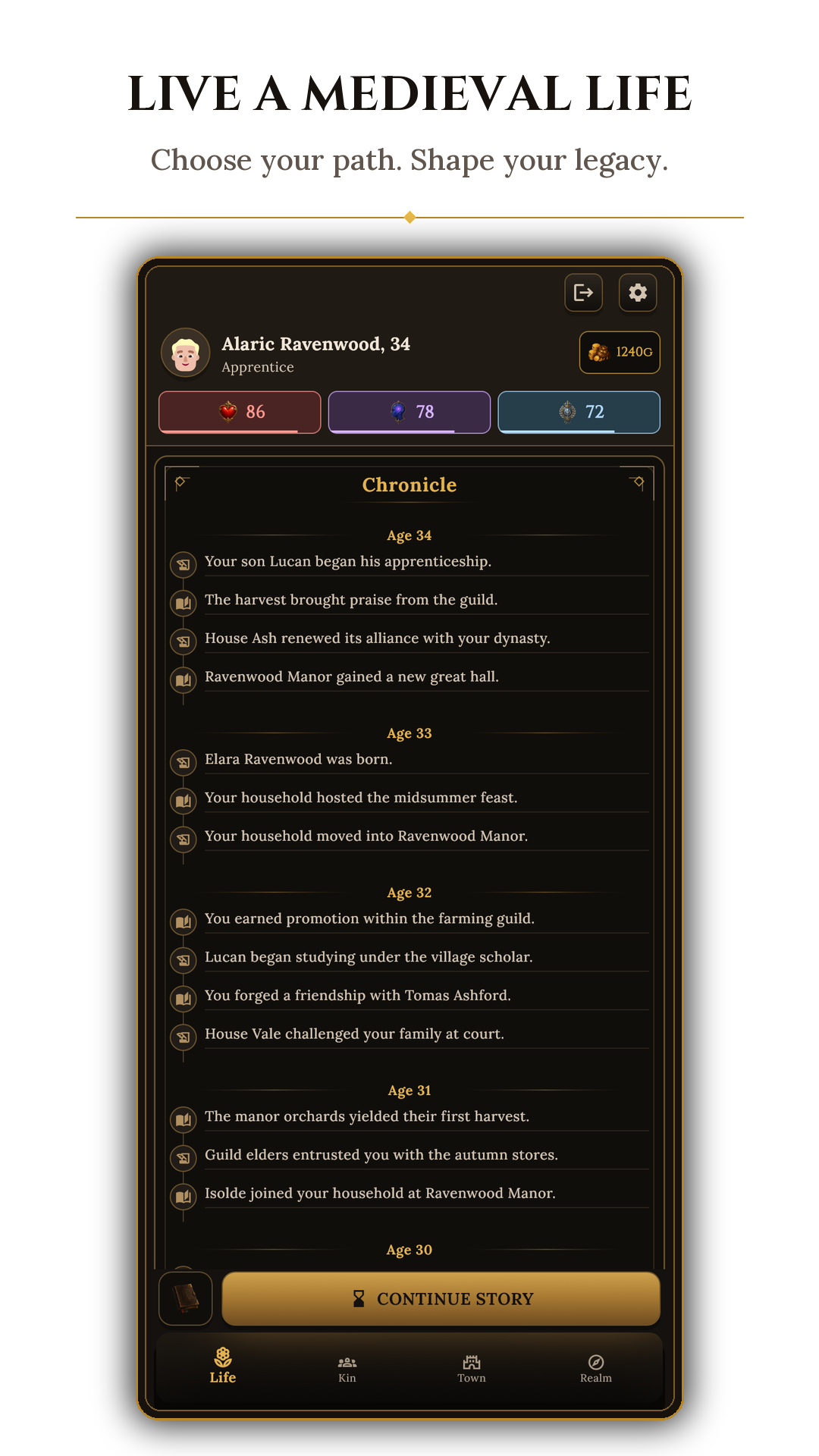
The game
One life becomes a family history
Kin Dynasty began as a systems-heavy medieval simulation. It has grown into a more focused life game built around one clear rhythm: make choices, advance the year, face the consequences and leave something behind.
The player can pursue work, love, property, influence and adventure. Those paths meet inside the same continuing story. Relationships change. Children become heirs. Rival houses remember. A death ends one life, but not the dynasty.
Core loop
Simple choices, lasting consequences
Every system supports the same life-to-legacy journey.
Choose your path
Work, learn, build relationships, explore the town or pursue influence.
Continue the story
Advance the year and let the world respond to what you have done.
Face the outcome
Health, family, wealth, reputation and the realm carry each consequence forward.
Shape a dynasty
Raise heirs, pass on a legacy and continue through another life.
Current experience
A wider medieval life
The current build extends beyond the original economy and town structure. Family, politics, danger and discovery now give each life more directions.
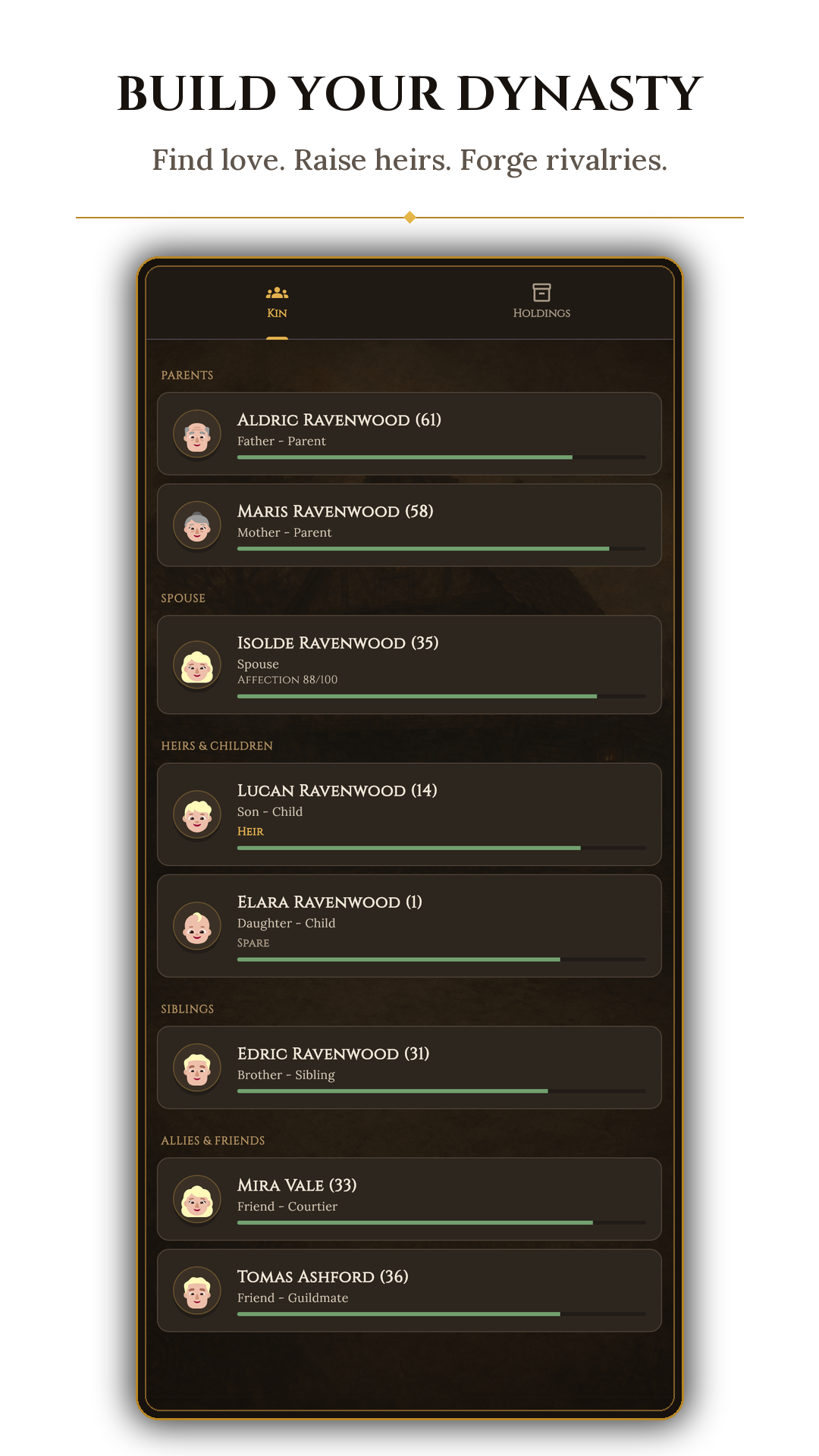
Dynasty
Build relationships that outlive you
Find love, raise children, choose an heir and carry the family story into another generation.
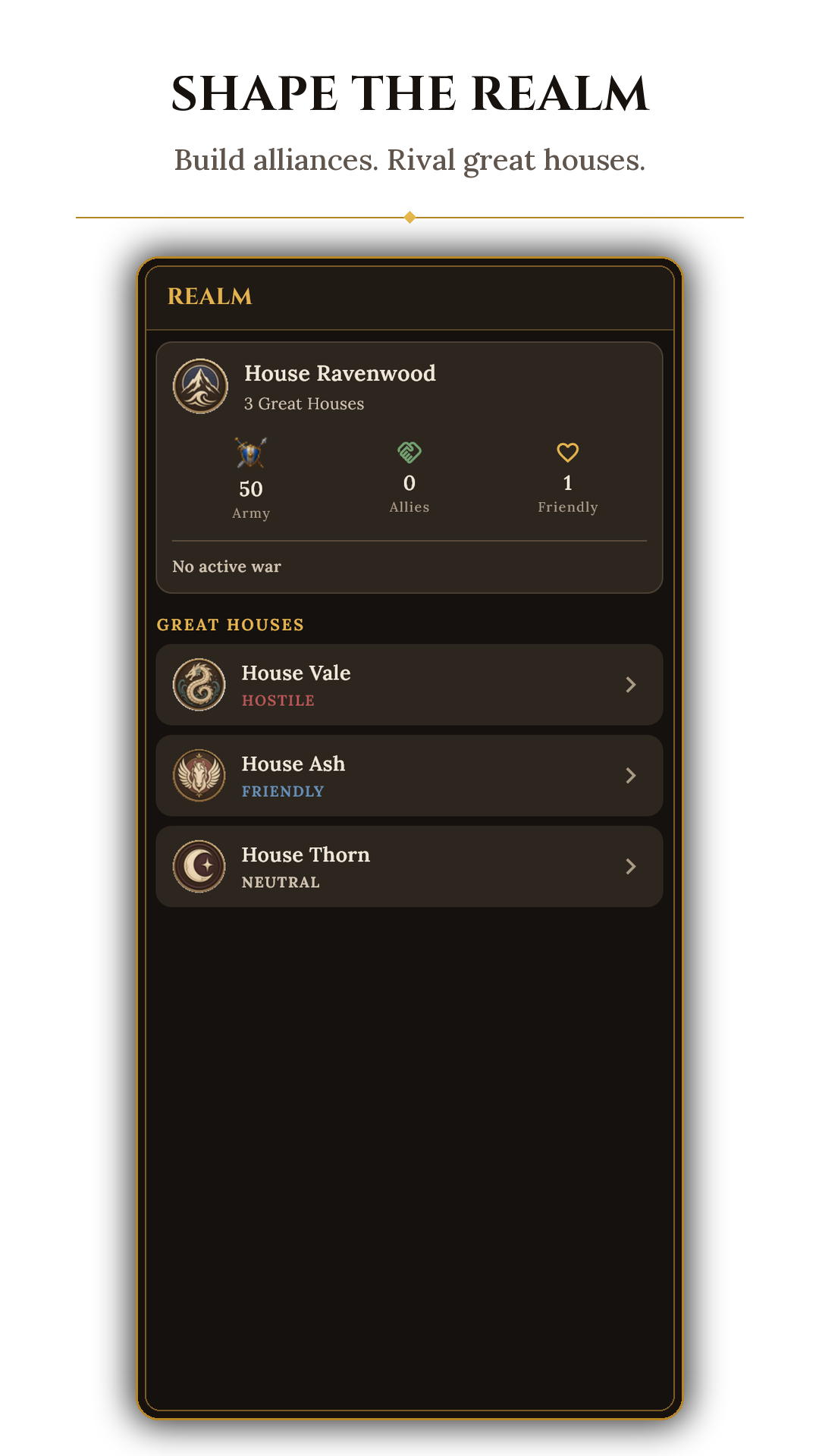
Realm
Find your place among great houses
Build alliances, manage rivalries and respond when the realm pulls your household into conflict.
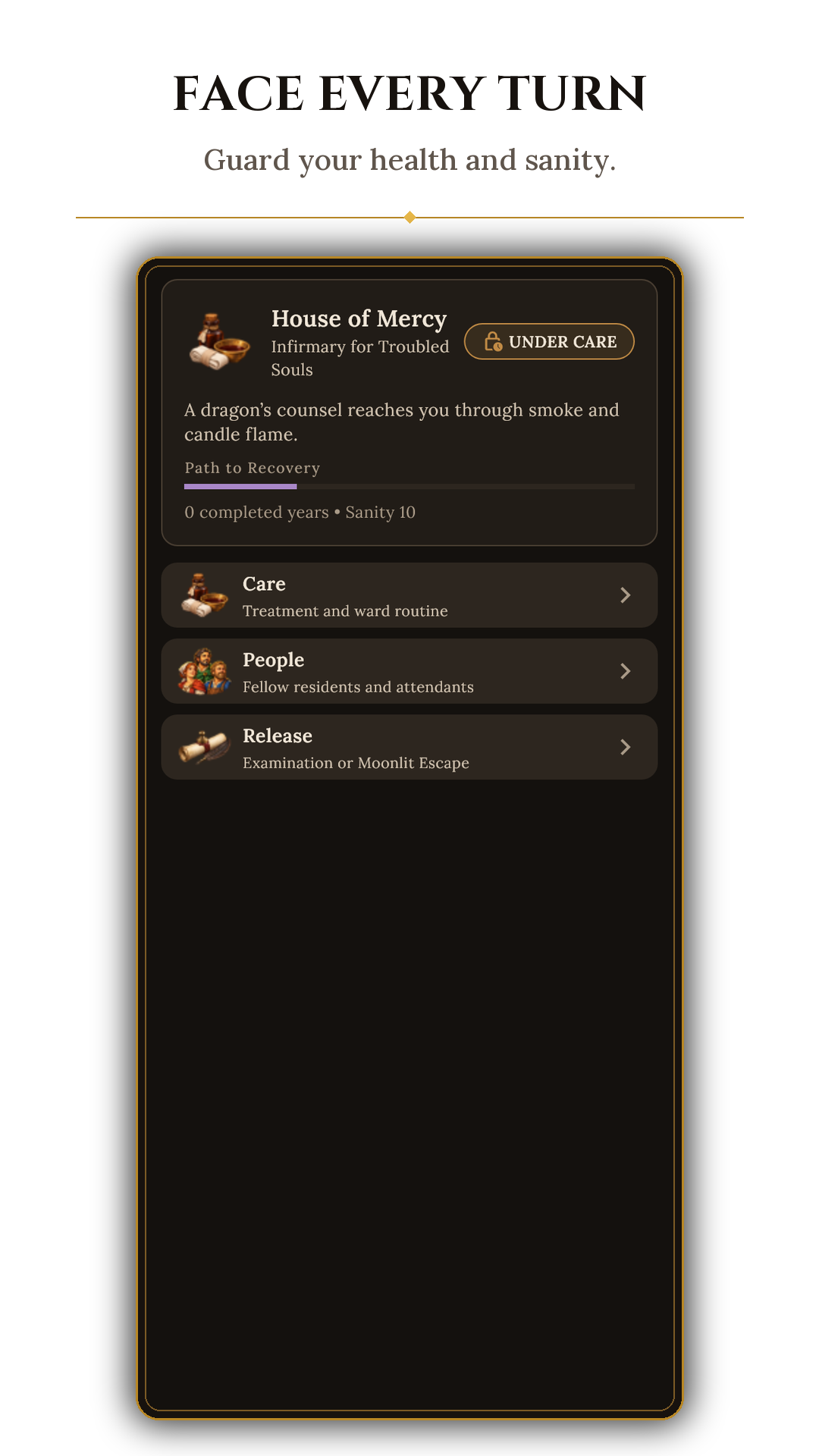
Life
Carry the cost of each year
Health and sanity create difficult turns, while care, recovery and escape remain part of the story.
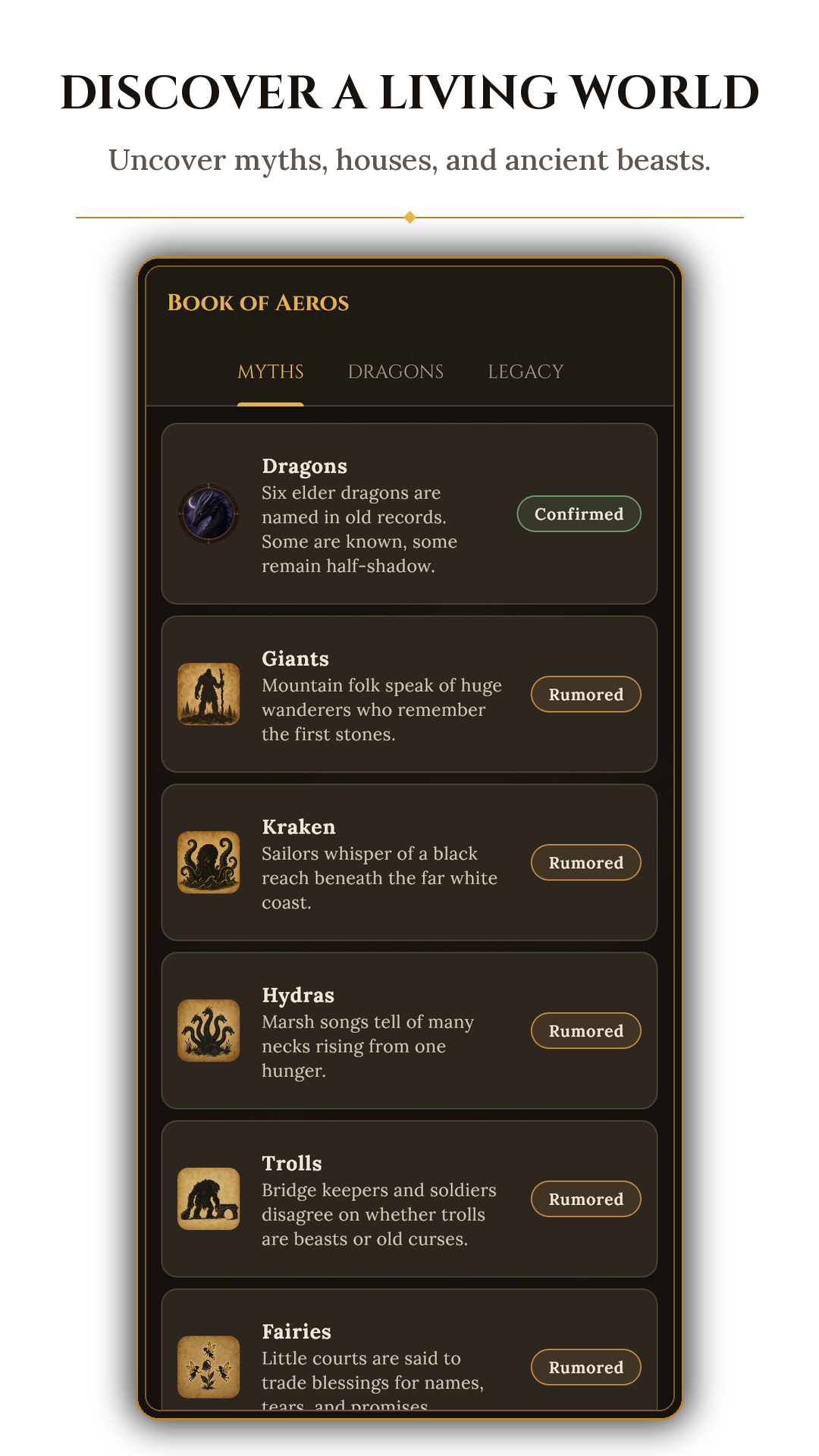
World
Discover more than daily survival
Myths, houses and ancient creatures give the setting history beyond the player's immediate life.
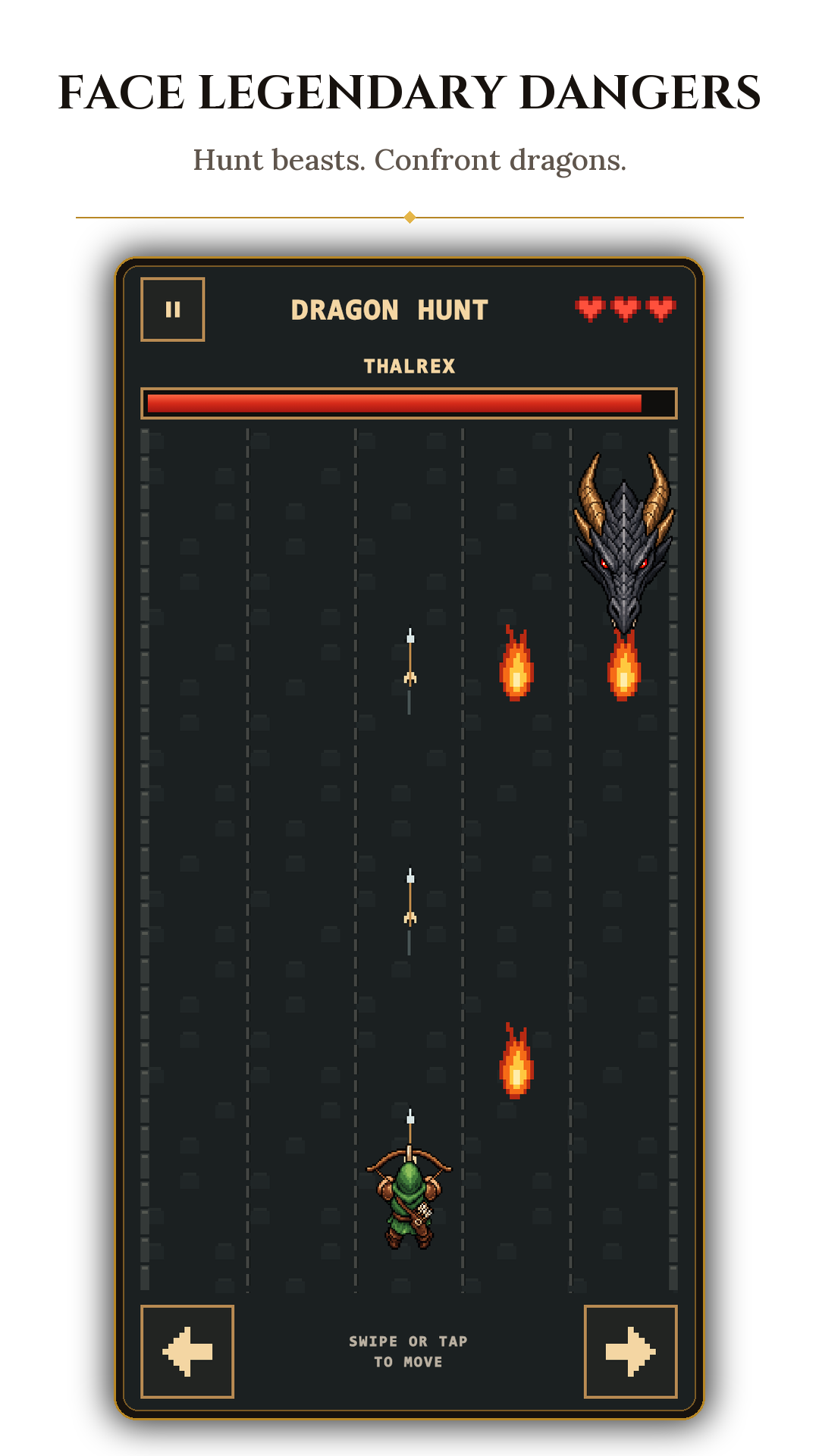
Danger
Break the rhythm with playable encounters
Hunts, escapes and other focused encounters turn major moments into direct challenges.
My contribution
Designing the whole experience
I created the concept and direct the game across its systems, interface, writing and visual identity. The central design challenge is depth without turning each life into administration.
Set the life-to-heir structure
I use the yearly rhythm and succession as the foundation for every feature.
Connect the systems
Careers, households, health, relationships and the realm share consequences instead of acting as separate modes.
Make outcomes readable
The Chronicle, popups and persistent state show how a decision changes the player's life.
Build a coherent identity
I brought the interface, writing and artwork into one restrained medieval visual language.
Development
From broad simulation to focused dynasty
Build a medieval simulation
The first version explored many systems, but the player's central journey was less clear.
Anchor life in places and years
The town, Chronicle and Continue Story loop made actions easier to understand.
Connect family, realm and danger
New systems added depth while remaining tied to the same character and dynasty.
Prepare the beta
I am refining balance, feedback, performance and long-life reliability before beta testing.
Current status
The next milestone is beta
The core game now supports connected lives across family, work, the town and the realm. Current work is focused on the quality of that experience: clearer outcomes, reliable saves, performance and playtesting across complete lives.
This page will continue to evolve with the build. Beta feedback will decide what needs strengthening before release.