Independent build · Trading automation
Algorithmic Trading Bot
I translated a trader’s chart-reading process into a Python pipeline that could find setups, define risk and report test executions across several forex pairs.
Challenge
Turn judgement into rules
The trader could recognise a setup from price structure and context. A program needed explicit conditions for each step: which data to read, when a chart matched the strategy, and where to place the entry, stop loss and target.
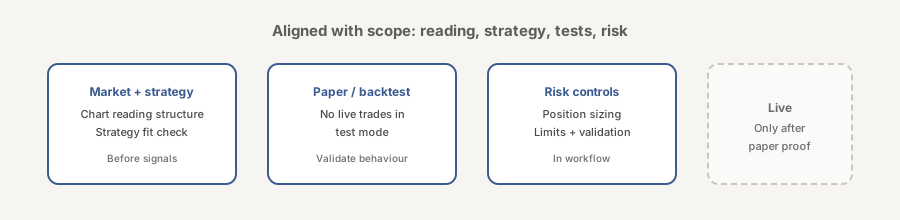
I treated live execution as a later gate. The first version had to reproduce the decision process in tests and expose enough detail for the trader to check each signal.
Contribution
I built the path from market data to a test order
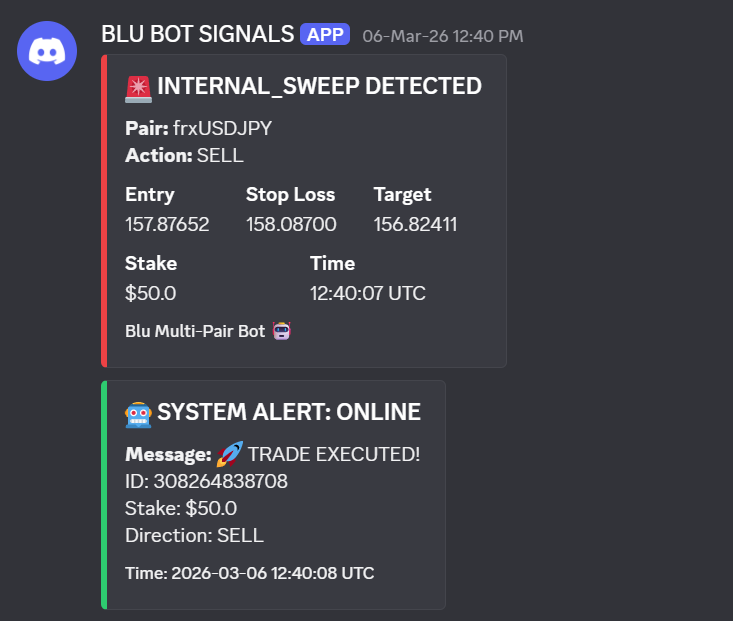
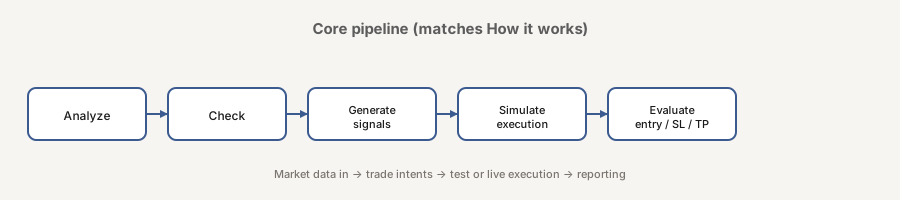
I split the strategy into five stages and kept the output readable. Each signal carried the pair, direction, entry, stop, target and stake, followed by an execution record with an ID and timestamp.
Read the market
The bot pulled price data and calculated the structure needed by the strategy.
Check the setup
Explicit conditions decided whether the chart matched the trader’s rules.
Define and report the trade
The pipeline calculated risk parameters, simulated the order and sent the full record to Discord.
Outcome
A traceable test workflow
The bot produced strategy-aligned signals across multiple forex pairs and recorded the parameters the trader needed to review them. Paper testing kept real capital outside the development loop.
The project also exposed the hardest part of trading automation: code can repeat a rule at speed, but the rule must describe the trader’s judgement without gaps.