Article · Game development
Building Kin: a medieval life simulation that reacts to your choices
A first look at the systems-first approach behind the game: households, work, money, time, and the stories that emerge between them.
Related project: Kin · Medieval life simulation
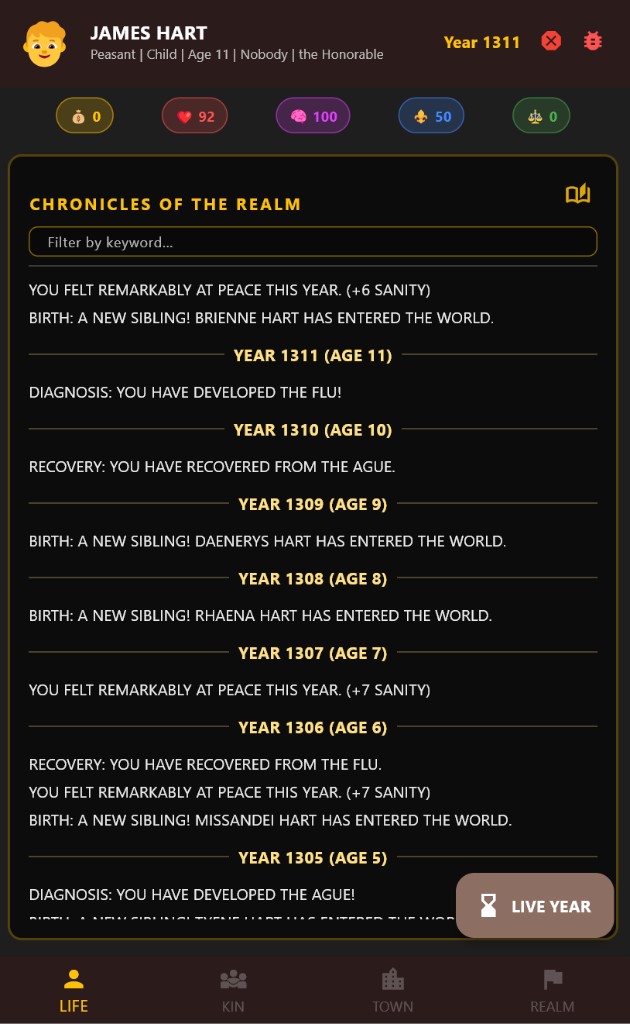
Kin is a medieval life and dynasty simulation I have been developing around one central idea: the world should feel connected. A job should affect a household’s income, income should shape what that household can do, and those choices should create events worth remembering.
The system underneath the story
The first work has focused on entities and flows: people and households, work and wages, businesses and resources, and the passage of time. Instead of treating these as separate screens, the aim is for each layer to feed the next.
- Work and duty create income and progression.
- Households connect family, budgets, and long-term decisions.
- The town provides places to spend, meet, and act.
- The chronicle turns system outcomes into a readable life story.
Watch the development story
Articles can stand alone or support a YouTube video. When the episode is ready, this becomes the responsive player, followed by written context, selected screenshots, and an optional transcript.
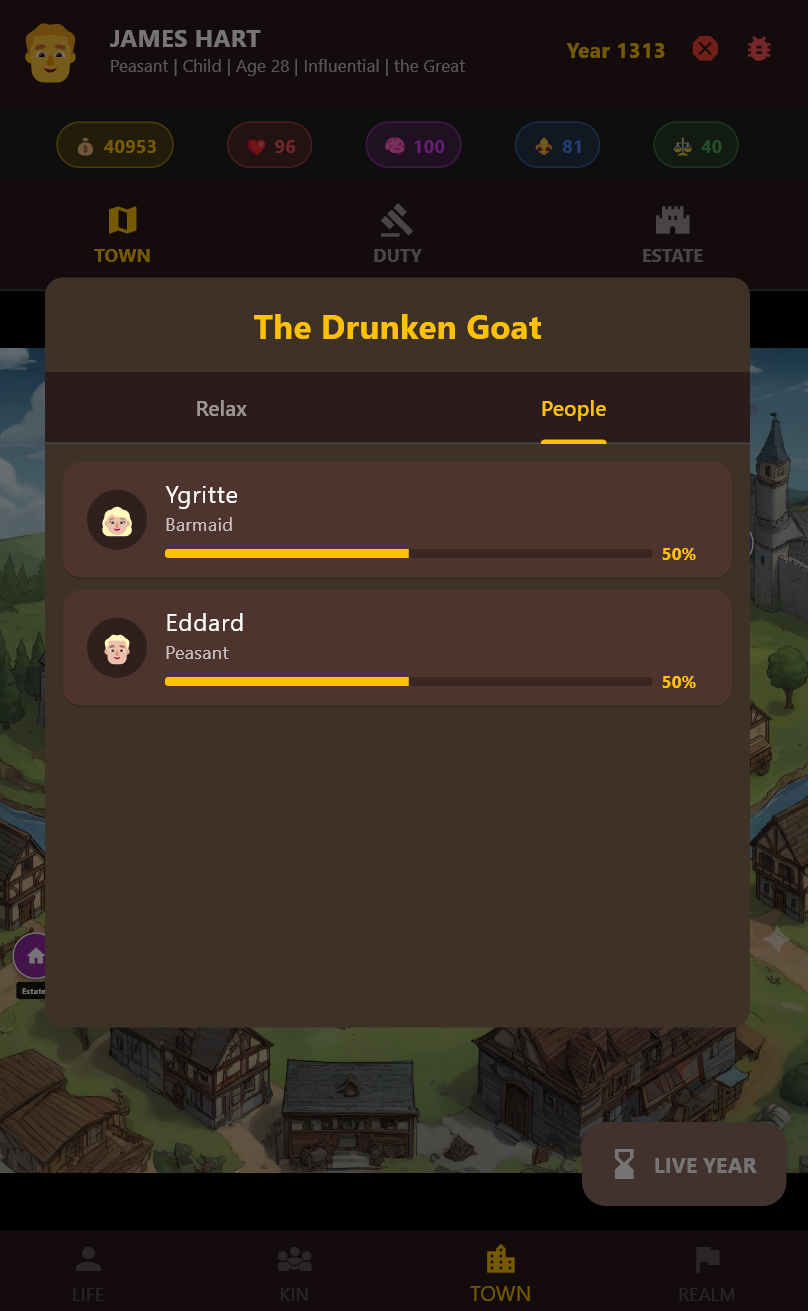
This space is ready for a YouTube episode.
More about the overall project
The portfolio page holds the more complete project overview, including the current interface, economy diagram, scope, and planned features.
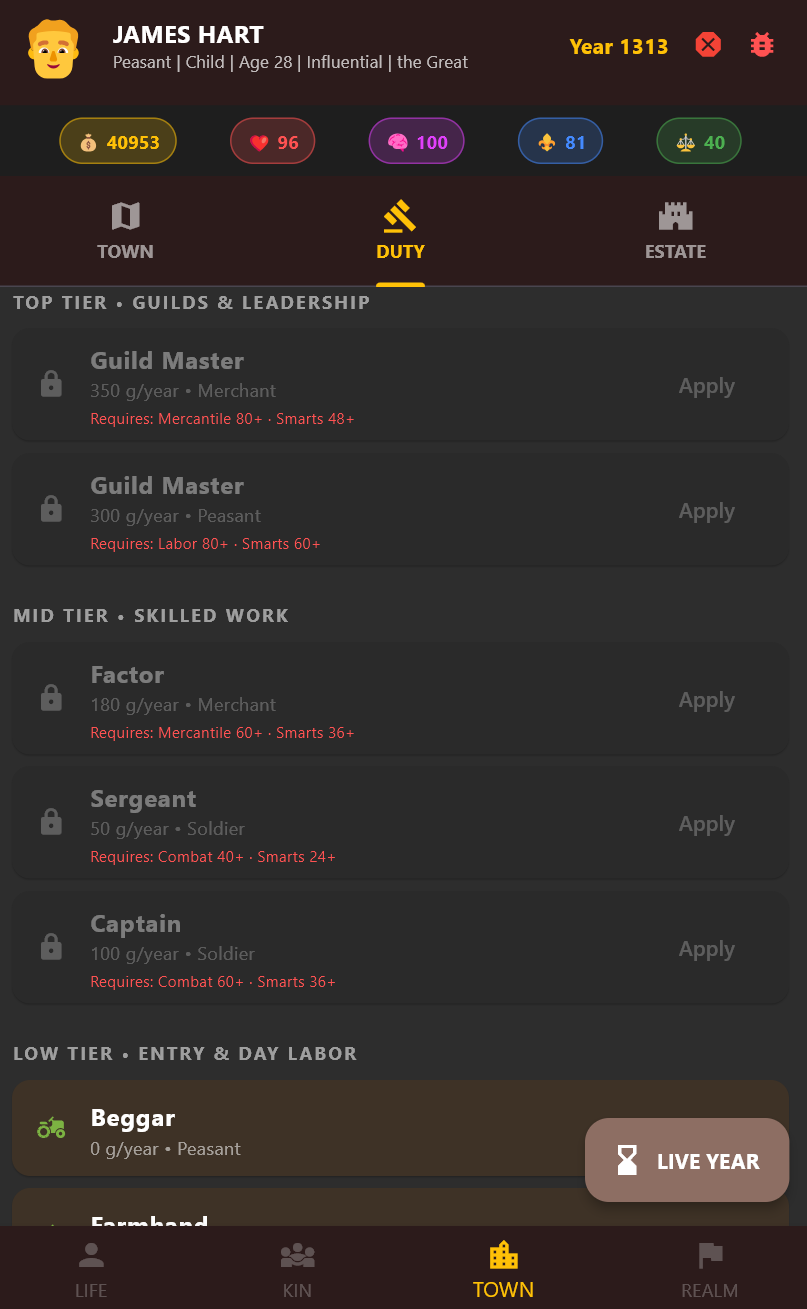
Kin (Life Simulation Game)
Explore the complete case study, screenshots, systems, and future direction.